
Core Web Vitals
Core Web Vitals & UX: The Complete Guide to Page Experience SEO
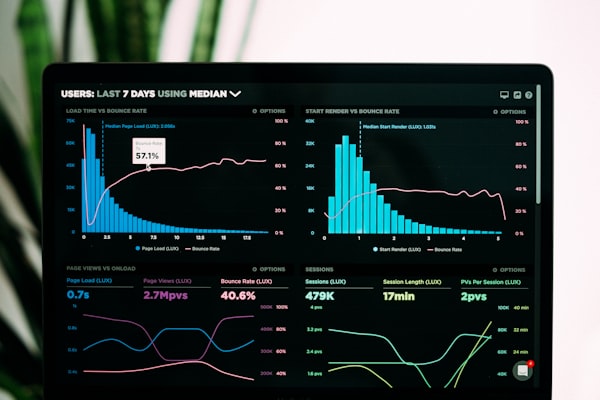
Google's Core Web Vitals became an official ranking factor in May 2021 and have grown more influential with every subsequent algorithm update. They measure three dimensions of page experience that correlate strongly with how users perceive site quality: loading performance, visual stability, and interaction responsiveness. Poor scores suppress rankings — good scores accelerate them.
The Three Core Web Vitals Explained
Understanding what each metric measures — and more importantly, what causes it to fail — is the prerequisite for fixing it. Most Web Vitals failures have a small number of root causes that, when addressed, resolve scores across entire site categories.
LCP — Largest Contentful Paint
What it measures: How long it takes for the largest visible element above the fold to finish rendering. The LCP element is almost always a hero image, a large heading text block, or a video poster frame.
Good threshold: Under 2.5 seconds. Needs improvement: 2.5–4 seconds. Poor: over 4 seconds.
Root causes: Uncompressed images, no fetchpriority="high" on the LCP image, render-blocking CSS or JavaScript delaying first paint, slow server response (TTFB over 800ms), and images served without a CDN.
Fixes: Serve hero images as WebP or AVIF, add fetchpriority="high" loading="eager" decoding="sync" to the LCP image element, move critical CSS inline, optimize TTFB by upgrading hosting or adding a CDN, and eliminate any render-blocking resources loaded before the LCP element.
INP — Interaction to Next Paint
What it measures: The responsiveness of a page to user interactions — clicks, taps, keystrokes. INP replaced FID (First Input Delay) as a Core Web Vital in March 2024 and is significantly harder to pass, because it measures all interactions throughout the page lifetime, not just the first one.
Good threshold: Under 200ms. Needs improvement: 200–500ms. Poor: over 500ms.
Root causes: Long JavaScript tasks (over 50ms) that block the main thread, large DOM sizes (over 1,400 nodes), excessive third-party scripts (chat widgets, ad scripts, analytics), and layout-triggering JavaScript running inside event handlers.
Fixes: Break long tasks using scheduler.yield() or setTimeout(0), defer or remove non-critical third-party scripts, use event delegation instead of per-element listeners, minimize DOM depth, and move expensive computations to Web Workers.
CLS — Cumulative Layout Shift
What it measures: The total amount of unexpected visual movement across the page's lifespan. Each layout shift is scored by the fraction of viewport that moved and how far it moved; these scores are summed to produce the CLS score.
Good threshold: Under 0.1. Needs improvement: 0.1–0.25. Poor: over 0.25.
Root causes: Images and videos without explicit width and height attributes, web fonts swapping after render (FOIT/FOUT), dynamically injected content above existing content, and ad slots without reserved space.
Fixes: Always declare width and height on every <img> tag, use font-display: optional or preload critical fonts, avoid injecting content above the fold after load, and reserve ad slot dimensions with explicit CSS min-height.
Google uses field data (CrUX) for ranking — not Lighthouse lab scores. A perfect Lighthouse score doesn't guarantee a Good Core Web Vitals assessment in Search Console. CrUX data is 28-day rolling average real-user experience. Fixing lab issues improves field scores, but the improvement takes 28 days to fully reflect in ranking.
Page Experience Beyond Core Web Vitals
Core Web Vitals are part of a broader Page Experience signal that also includes HTTPS security, mobile-friendliness, and absence of intrusive interstitials. Google's Page Experience documentation makes clear that all four signals are evaluated together.
Mobile-friendliness deserves special attention: as of 2023, Google uses mobile-first indexing for all sites, meaning the mobile version of your content is what Google crawls, indexes, and ranks. A site that scores well on desktop CWV but poorly on mobile will be ranked based on the mobile experience. Our technical SEO audits always measure CWV separately for mobile and desktop, because mobile failures are more common and more consequential.
Core Web Vitals and Conversion Rate
The business case for Core Web Vitals investment goes beyond rankings. Google's own research shows that sites meeting Good CWV thresholds have 24% lower abandonment rates than sites with Poor scores. For e-commerce specifically, a 0.1-second improvement in mobile page load time correlates with 8% improvement in conversions.
This is why our eCommerce SEO service treats CWV fixes as a first-priority item — the ranking benefit and the conversion benefit compound each other. Faster pages rank higher and convert better simultaneously.
Fix Core Web Vitals without breaking your site
We audit every CWV failure to root cause level — not just scores — and implement fixes that improve real-user field data within 28 days. No guessing, no generic advice.
Common Core Web Vitals Mistakes That Waste Engineering Time
Teams frequently spend weeks on Core Web Vitals work that produces no ranking or field-data improvement, because the effort targets the wrong signal or the wrong page set. These are the mistakes we see most often when auditing sites that have already attempted CWV remediation.
Optimizing pages that don't matter. CrUX groups URLs, and Search Console reports at the URL-group level, not per-page. Spending a sprint perfecting a single low-traffic page while the templates behind your top 20 landing pages remain untouched produces no visible change in the report Google actually uses. Prioritize by organic sessions and template reuse, not by whichever page is easiest to fix.
Chasing a perfect Lighthouse score. A 100/100 Lighthouse performance score is a lab-only number under idealized network and CPU conditions. It does not guarantee Good field data, and the marginal engineering cost of going from 90 to 100 rarely produces a proportional field-data gain. Diminishing returns set in well before a perfect score — the CrUX thresholds (2.5s / 200ms / 0.1) are what matter, not the Lighthouse number itself.
Fixing CLS with JavaScript instead of CSS. A common anti-pattern is measuring an image after it loads and setting its container height via JavaScript. This still causes a shift, because the shift happens before the script executes. The correct fix is always declaring intrinsic width/height attributes or using aspect-ratio in CSS so the browser reserves space before any content arrives.
Ignoring third-party scripts. Live chat widgets, heatmap tools, A/B testing platforms, and ad tech frequently contribute more to poor INP than a site's own code. Audit every third-party script's execution cost using Chrome DevTools' Performance panel before assuming your own JavaScript is the bottleneck — in our audits, third-party scripts account for the majority of long tasks on roughly half of the sites we review.
Treating mobile and desktop as one number. A site can be Good on desktop and Poor on mobile simultaneously, and since mobile-first indexing means Google evaluates the mobile experience for ranking purposes, a desktop-only fix does not move rankings. Always segment CWV analysis and remediation by device.
Framework-Specific Considerations
The root causes of Core Web Vitals failures differ by platform, and generic advice often misses the platform-specific fix that actually resolves the issue.
WordPress: The most common LCP killer is an unoptimized page builder (Elementor, Divi) rendering large amounts of DOM before the hero image, combined with render-blocking plugin CSS/JS loaded in the <head>. Audit active plugins for unnecessary global asset loading, and use a caching plugin that supports critical CSS extraction.
Shopify: Theme apps are the leading cause of both poor LCP and poor INP — each installed app can inject its own script tag, and Shopify offers limited native control over script loading order. Audit installed apps quarterly and remove any that aren't actively driving revenue; each unused app is pure Core Web Vitals debt.
React / Next.js / SPA frameworks: INP is usually the hardest metric to pass, because client-side hydration and route transitions can block the main thread. Use code-splitting to avoid shipping the entire application bundle on first load, and audit useEffect hooks that trigger expensive re-renders on user interaction.
Headless and JAMstack sites: These sites often score well on LCP by default (pre-rendered HTML, edge CDN delivery) but can still fail CLS if client-side data fetching injects content — like personalization banners or recommendation widgets — above existing content after the initial render.
How to Measure Core Web Vitals Correctly
Use Google Search Console (Core Web Vitals report) as your primary measurement source — it shows real-user CrUX data segmented by mobile/desktop and URL groups. This is the data Google uses for ranking. Use PageSpeed Insights to diagnose individual URLs and get Lighthouse lab data to understand root causes. Use Chrome DevTools' Performance panel to trace specific long tasks and layout shift sources.
Do not rely solely on Lighthouse scores. A Lighthouse score of 95 with poor CrUX data is a common situation, especially for sites with large amounts of JavaScript that perform differently under real network conditions and with populated local caches.
A Realistic Timeline for CWV Improvement
CWV improvements follow a predictable pattern. The highest-impact fixes — image optimization, fetchpriority on LCP images, width/height attributes — are implementable in days and begin improving lab scores immediately. Field data (CrUX) takes 28 days to fully reflect changes, since it's a rolling 28-day average of real user sessions.
For sites with fundamentally poor performance (LCP > 4 seconds, INP > 500ms), a full technical SEO engagement typically improves CrUX assessments from Poor to Good within 60 days. The ranking impact follows 2–6 weeks after field data improves, because Google re-evaluates page experience signals periodically rather than in real time.
Combined with comprehensive content strategy and strong link building, eliminating CWV failures removes a ranking ceiling that no amount of content or links can compensate for. In competitive verticals in 2025, Good Core Web Vitals aren't a nice-to-have — they're the price of admission for page one.
Frequently Asked Questions
A page passes Core Web Vitals when LCP is under 2.5 seconds, INP is under 200ms, and CLS is under 0.1, measured using 75th-percentile field data (CrUX) across mobile and desktop. Google's Search Console reports a URL group as Good, Needs Improvement, or Poor based on these thresholds.
No. Core Web Vitals are one of many ranking signals, and their weight increases as competition for a query grows. In highly competitive SERPs where multiple pages have comparable content quality and authority, Core Web Vitals often become the deciding factor. For low-competition gaps, fixing CWV alone will not overcome a weak content or authority position.
Lighthouse produces lab data from a single simulated session under controlled conditions. Search Console's Core Web Vitals report uses CrUX field data, a rolling 28-day average of real user sessions across real devices and network conditions. A fix that improves lab scores immediately can take up to 28 days to fully propagate through field data.
INP is typically hardest because it requires auditing every interactive element throughout a page's full lifetime, not just the initial load. Sites with heavy client-side JavaScript, large third-party script payloads, or complex single-page-application routing tend to struggle most, since the fixes require restructuring how and when JavaScript executes rather than a single configuration change.
A CDN helps LCP by reducing server response time and image delivery latency, but it cannot fix INP issues caused by heavy JavaScript execution or CLS issues caused by missing image dimensions and late-loading fonts. A CDN is one piece of a complete Core Web Vitals strategy, not a substitute for fixing the underlying rendering and script issues.